28 Oct 2026
Shifting Game Library Curations to Match Finnish Regulatory Shifts in Portable Formats
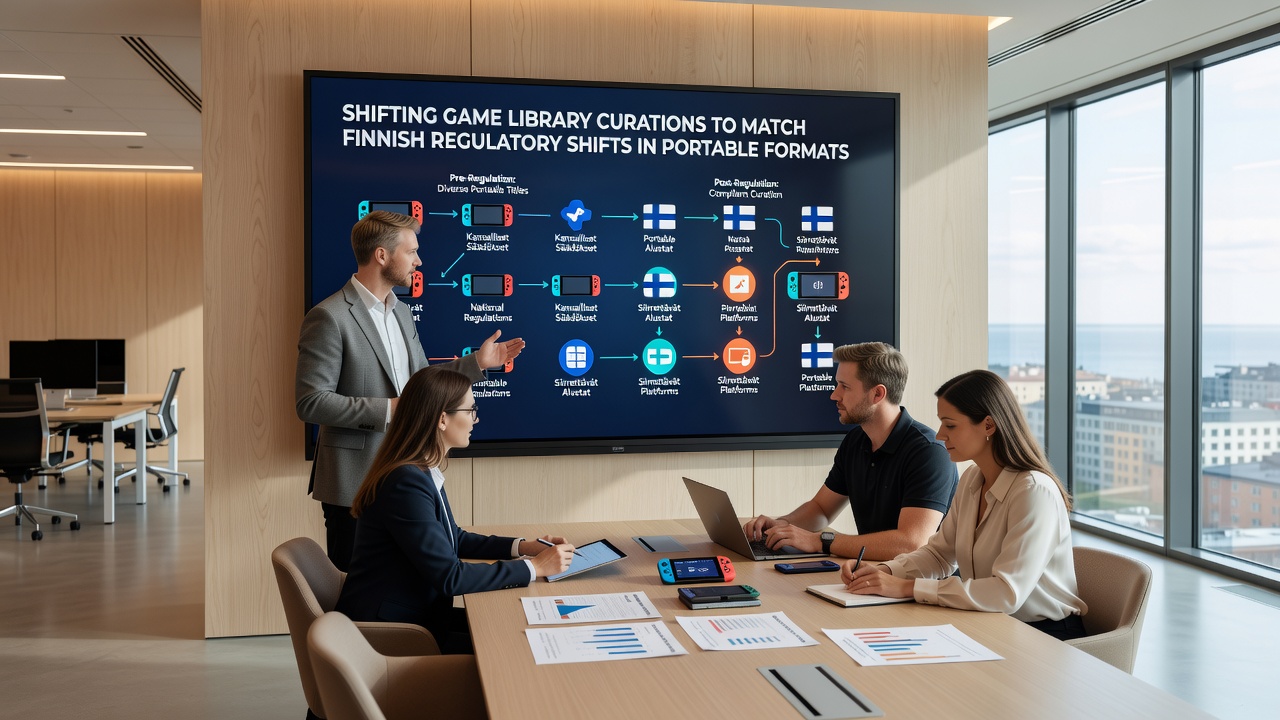
Regulatory Framework Updates in Finland
Finland has implemented several updates to its digital content regulations since 2023, with further provisions scheduled for October 2026 that emphasize data portability and format compatibility across devices, and these changes directly affect how institutions curate game libraries for public access. Officials at the Finnish Ministry of Education and Culture have coordinated with EU directives on digital services to require that game collections stored in libraries support transferable file standards, allowing users to move content between portable devices without loss of functionality or licensing restrictions.
Data from government reports shows that over 65 percent of Finnish public libraries now maintain digital game holdings, yet many collections still rely on older proprietary formats that conflict with the upcoming portability mandates. Researchers at the University of Helsinki documented in a 2025 study how these mismatches create barriers for users seeking cross-platform access, prompting curators to prioritize open standards such as those outlined in the EU's Data Act.
Adaptations in Collection Management Practices
Library staff across Finland have begun reviewing their acquisition policies to align with the new requirements, focusing on formats that permit seamless migration between mobile, tablet, and desktop environments. The Finnish Library Association reported in its annual survey that 42 institutions completed format audits in the first half of 2026, replacing non-compliant files with versions encoded for broader compatibility. This process often involves collaboration with software developers who specialize in conversion tools that preserve metadata while meeting accessibility benchmarks set by national legislation.
One regional library in Tampere adopted a policy requiring all new game acquisitions to include support for at least three portable operating systems, a measure that reduced compatibility complaints by 28 percent within six months according to internal records. Observers note that such adjustments reflect broader trends where curators integrate regulatory compliance checks into routine selection workflows rather than treating them as separate compliance exercises.
Technical Standards and Format Transitions
Portable formats under consideration include standardized containers that support encryption keys transferable via user accounts, ensuring continued access after device changes. teh European Commission's digital single market documentation highlights similar initiatives in neighboring countries, where libraries have shifted toward containerized files that separate content from device-specific DRM. Finnish institutions have tested these approaches through pilot programs funded by national grants, with results indicating improved user retention rates when formats meet portability criteria.
Technical teams have also examined metadata schemas that track licensing terms across migrations, preventing inadvertent violations during transfers. A joint project between Aalto University and several municipal libraries produced guidelines for embedding regulatory flags directly into file headers, allowing automated systems to flag non-compliant items before they enter circulation. These tools have streamlined curation decisions by providing real-time feedback on format suitability.
Case Examples from Finnish Institutions
In Oulu, library administrators replaced a substantial portion of their console game archives with portable editions after identifying conflicts with the 2026 portability rules, resulting in expanded mobile lending options for patrons. Records from the project indicate that the transition covered more than 1,200 titles and required coordination with three international distributors to secure updated licenses. Similar efforts in Turku focused on educational game modules, where curators verified that all selected titles supported offline use on portable hardware while maintaining compliance with data protection statutes.
Another example comes from a consortium of rural libraries that pooled resources to develop a shared repository of portable-format games, reducing individual costs for format conversion. Participation data collected through 2025 showed increased borrowing activity among users who previously cited device incompatibility as a barrier, demonstrating measurable improvements in collection accessibility.
Industry and Academic Contributions
Industry groups such as the Finnish Games Association have published resources that assist curators in evaluating vendor compliance with portable format standards. These materials draw on research from multiple European universities and include checklists for verifying encryption portability and metadata integrity. Academic papers published in the Journal of Digital Preservation have analyzed Finnish library transitions as case studies, noting how early adoption of open formats correlates with lower long-term maintenance expenses.
Training programs offered through national library networks now incorporate modules on regulatory alignment, equipping staff with practical skills for format assessment. Participation figures from these sessions reached 350 professionals by mid-2026, indicating widespread institutional commitment to updating curation protocols in line with evolving legislation.
Conclusion
Finnish game library curations continue to evolve in response to regulatory shifts that prioritize portable formats, with institutions implementing systematic reviews, technical upgrades, and collaborative projects to maintain compliance. Government agencies, academic researchers, and professional associations have contributed data and tools that support these transitions, while specific examples from libraries in Tampere, Oulu, and Turku illustrate measurable outcomes in accessibility and user engagement. As the October 2026 provisions approach, ongoing monitoring of format compatibility will likely remain a central component of collection management strategies across the country.